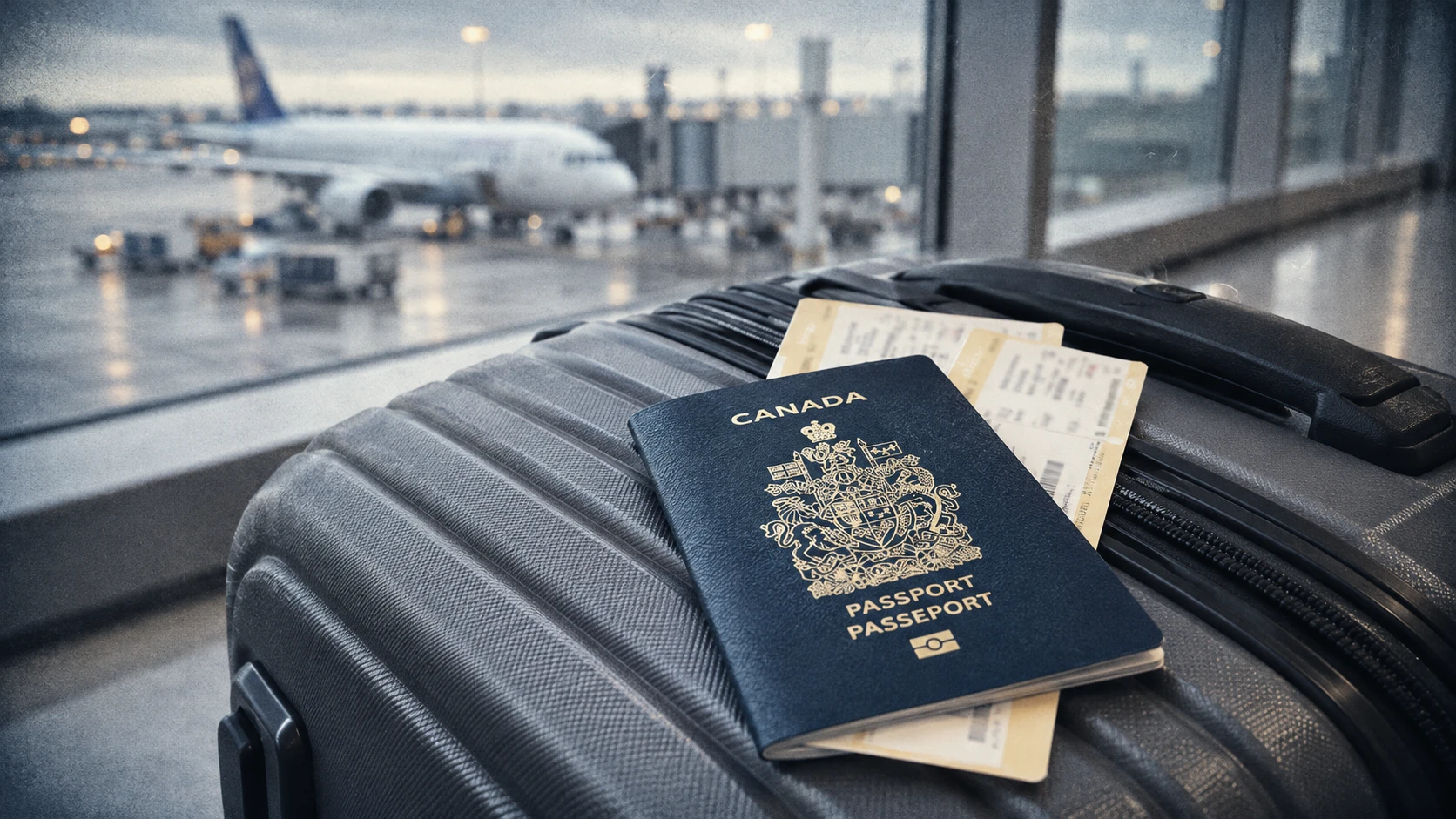
A useful cabin bag is easy to understand when you open it. The things you need first are accessible, fragile items have a sensible place and important documents are kept together. Start with the way you will use the bag, then check what you are allowed to carry.
Make two separate checks before you pack: the airline’s cabin-baggage allowance and the security rules for the airport where you will be screened. One does not replace the other. Revisit both if you add another airline or airport to the journey.
01 / Put the next thing near the top
Set aside a secure, accessible place for the original travel documents you need, your confirmed itinerary and the contact information for the next stage. Avoid carrying loose papers in several different pockets. The aim is to find the right item without unpacking everything in a queue.
Think about the time between leaving home and reaching your accommodation. A charging cable, a layer of clothing or a small item for personal comfort may earn its space because you will use it during that stretch. These are packing suggestions, not a universal list of required belongings.
Keep any backup copies private and separate from the originals. If a digital copy is useful to you, consider how you will access it without a working mobile connection. A copy helps you keep information available; it does not take the place of an original document needed for travel.
02 / Read the container, not the contents
For standard, non-exempt liquids, aerosols and gels at Canadian airport security, CATSA specifies containers with a capacity of no more than 100 ml/100 g. They must fit in one clear, closed, resealable bag of no more than 1 L. A larger container does not become compliant because it is only partly full.
Read the exceptions and full instructions in CATSA’s carry-on packing guidance.
Use that check while you are still packing at home. Group the items you want to take, read each container’s stated capacity and remove anything you cannot confidently match to the rules. Check CATSA’s permitted-item information if you are unsure about a particular object.
These are Canadian security-screening instructions. A later screening point in another country may have different requirements. Review the relevant authority’s guidance for the other airports on your route instead of treating the first check as an answer for the entire trip.
03 / Give medicines their own check
CATSA provides separate guidance for medication and medical items. Prescription and essential non-prescription liquid, gel and aerosol medicines may exceed the ordinary 100 ml limit and need not fit into the standard 1 L bag. Keep them accessible and present them to screening officers for inspection.
CATSA also recommends original pharmacy-labelled containers for liquid prescription medicines. See medication and medical items for the full screening guidance.
A security-screening exception does not determine whether another country allows an item to be imported. If you will travel internationally, review the destination’s rules and ask the relevant authority about anything unclear. This publication does not give medical advice or decide what medicine you should carry.
04 / Check the bag as well as what is in it
Read the operating airline’s own information for your booking. Confirm the size, weight and number of cabin items it permits, and check whether your ticket or any connecting carrier changes those details. Do this before assuming that a bag used on an earlier trip will be suitable again.
Practise closing the bag without forcing the zip. Make sure you can lift it and move with it in the way your journey requires. If you need assistance, contact the airline or airport to discuss your needs rather than relying on an assumption about what will be available.
A SIMPLE PACKING ROUTINE
Pack once. Open the bag as you would at the terminal. Find the items you need first. Move anything that makes that difficult, then check the airline and screening rules again for the final contents.
05 / Finish with a small, deliberate review
Walk through the stages of your journey in order. What will you need at the first check-in? What should stay available during a connection? What would be useful when you arrive? A bag packed around those questions can be easier to use than one filled around hypothetical situations.
Once the bag is ready, keep it in the same place as the departure note. Leave any final items on a short reminder list so you can add them before leaving. The last check should confirm a plan you already understand, not begin a new round of rushed packing.
Read the original guidance
- CATSA — Pack your carry-on
- CATSA — Medication and medical items
- Government of Canada — Traveller’s checklist
Checked 12 October 2026. This is a source-review date, not an announcement of a rule change. Recheck official guidance for your own route before travelling.